 Ask Alto
TRY · 12 MIN
My Real Network
TAIU
Names, not a feeling.
Try it →
Was this useful?
Tool 33 · Develop yourself
A guided 16 to 20 minutes conversation, here in TAIU. Not an audit of how popular you are. A small network is not a fault. A large one is not an achievement.
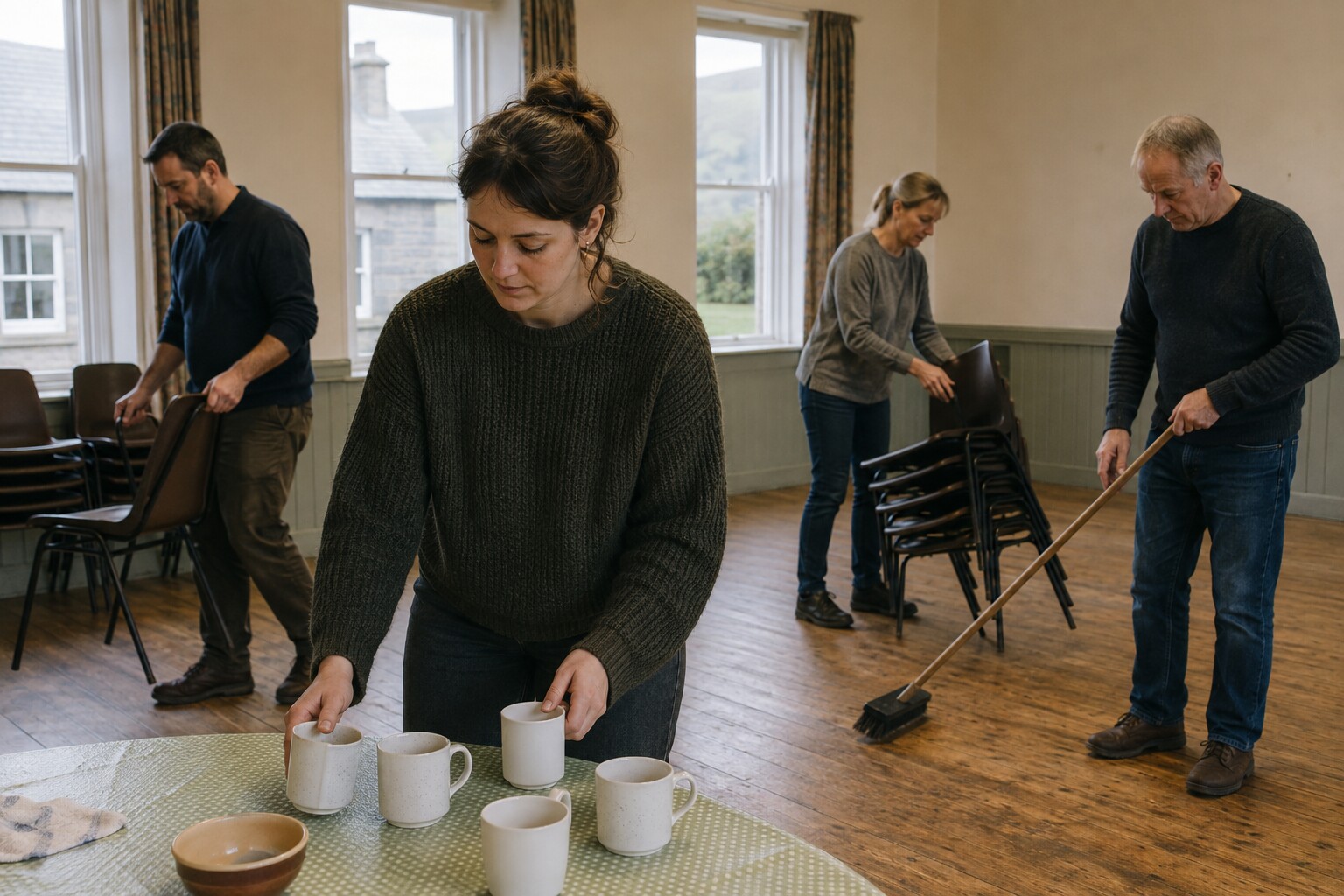
Not who cares about you. Who knows. It is a shorter list. It is the one that matters.
Being the person everybody relies on is not the same as being supported.
What you'll look at
A note from Mark

The interesting question is not how many people you know. It is who knows what is currently going on with you. Those are usually two very different lists. The second one is often shorter than people expect.
The other thing worth watching is direction. Some people are not short of relationships at all. They are short of relationships in which anybody asks them anything. That is a specific problem. It does not get solved by meeting more people.
I would also be careful about the word dormant. Most friendships that have gone quiet have not ended. They have simply had nobody go first for a while. Going first costs less than people imagine.
And if the map comes out small and solid, that is a good result. It is not the answer people expect, but it is often the true one.
What you'll get
01
The real map
02
Who knows the present
03
One way traffic
04
What is dormant
+
Your TAIU handover: a summary of what the conversation found, written so you can take it with you.
When you finish
Your tree is where TAIU keeps a picture of your whole life, in parts like work, money and health.
At the end, the conversation asks how Family and belonging feels for you right now, in your own words. It also asks what, if anything, would feel different. Nothing changes on your tree unless you say it changes.
The conversation writes this summary for you. Keep the sheet, print it or paste it into My Tree. Nothing from the conversation is stored by TAIU.
What now?
01 · Save it
A map of who is actually there, built from behaviour.
02 · Test it
Answer the message you have left for eleven days.
What I would do
Work from what people do rather than from how long you have known them.
Look at the traffic in both directions. Being everybody's support is a finding too.
Separate the people who know your history from the people who know your present.
Notice what the existing network already does well before deciding it is insufficient.
Count dormant relationships properly. Most are not over.
Test it
Who would you call at eleven at night, and would they answer?
Who knows what has been occupying you this month?
Which name did you avoid mentioning during this exercise?
The alternative
The expected conclusion is that the network is too small. Sometimes the evidence points the other way. The network may be perfectly adequate and undervalued, with three people who would turn up at short notice being read as not enough because a feed suggests otherwise. Sometimes the problem is not scarcity but direction: somebody surrounded by people who all need something from them. And sometimes what looks like a shrinking circle is a normal consequence of getting older and choosing fewer, closer relationships on purpose.
Think about this
Take this to Ask Mark
This looks at what you found and helps you understand it. It is not another exercise to repeat.
Take this to Ask Mark →TRY · 12 MIN
TAIU
Names, not a feeling.
READ · BOOK
Robin Dunbar
Dunbar's layered circles explain why the number of people you can genuinely keep up with is small, and why guilt about the rest is misplaced.
READ · RESEARCH
Mark Granovetter
Granovetter's paper is the reason acquaintances matter more than they feel like they should. Useful when a life looks thin but is actually broad and shallow.
What helped you?
If you've read, watched, listened to or tried something that helped you think about this differently, we'd like to hear about it.
We review recommendations before sharing them with the community.
Finished the exercise?
Tell us whether it helped and what you discovered. It takes less than a minute.

Next tool
If the map is populated and something is still missing
Before you start
Reading, if you would rather understand the question first.
Further thinking
How Many Friends Does One Person Need?
Robin Dunbar
The Strength of Weak Ties
Mark Granovetter
The Good Life
Robert Waldinger & Marc Schulz
Book
Robin Dunbar
Dunbar's layered circles explain why the number of people you can genuinely keep up with is small, and why guilt about the rest is misplaced.
Article
Mark Granovetter
Granovetter's paper is the reason acquaintances matter more than they feel like they should. Useful when a life looks thin but is actually broad and shallow.
Book
Robert Waldinger & Marc Schulz
The Harvard Study of Adult Development has followed lives across decades. One of its clearest lessons is that the quality of our relationships matters enormously to how our lives unfold.
Book
Robert Putnam
Putnam's account of the decline of associational life is contested and largely American, and it still changes how you count your own contribution. Membership, attendance and turning up repeatedly for something small are treated here as real civic goods rather than as lesser versions of writing a cheque.