 Ask Alto
TRY · 10 MIN
Rebuild My Circle
TAIU
Three plausible possibilities, not a social strategy.
Try it →
Was this useful?
Tool 35 · Develop yourself
A guided 18 to 22 minutes conversation, here in TAIU. This exercise assumes you already know something needs to change. It will not tell you to join a club.
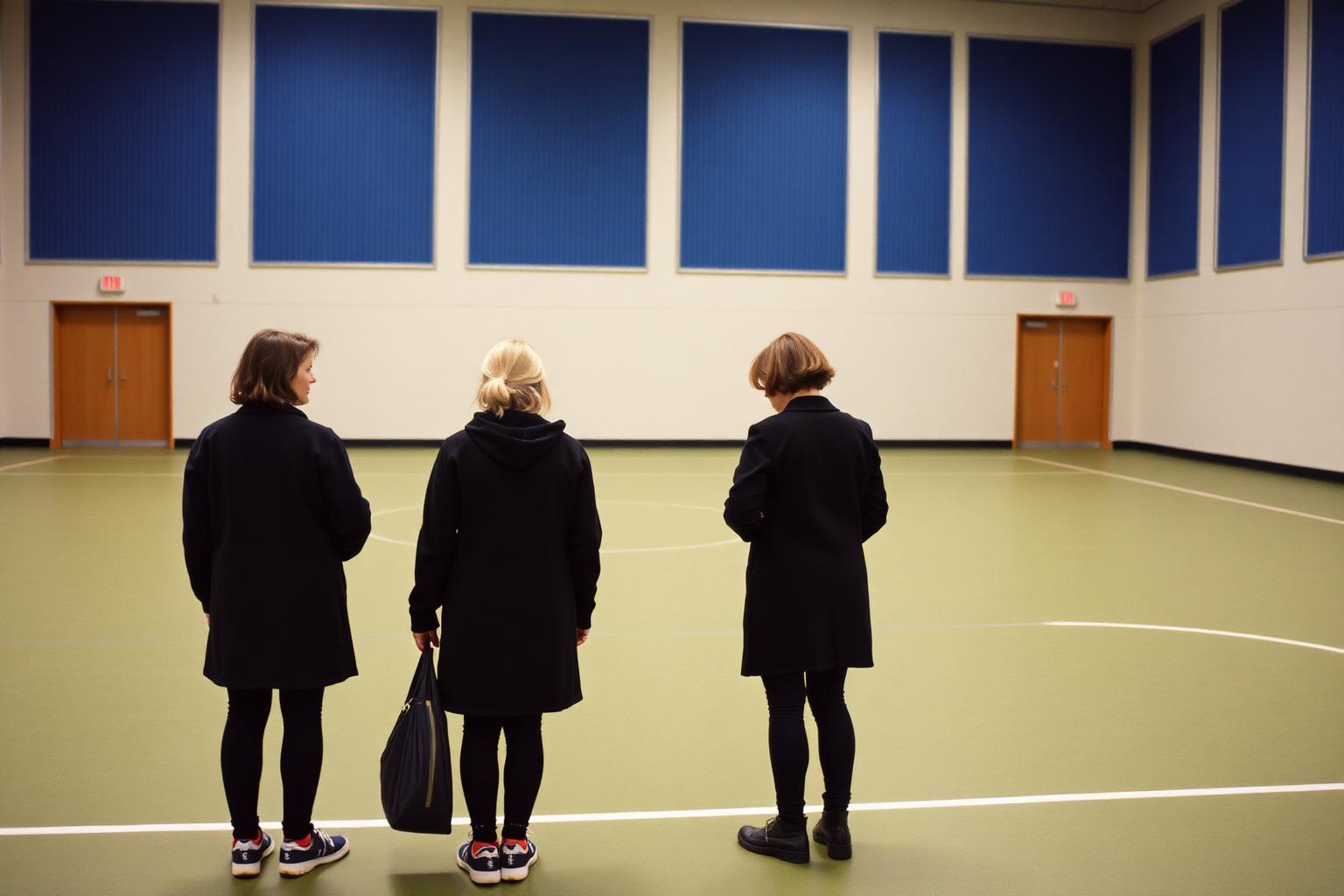
Somebody has to suggest things repeatedly for nothing. If it is not you, it is nobody.
Most dormant friendships are one message from being live again.
What you'll look at
A note from Mark

The bit nobody says out loud is that adult friendships need somebody to do the admin. Most people are hoping it will be somebody else. If the circle is going to reform, a good deal of the early work is you. You suggest things that other people are pleased about but would not have arranged themselves.
The second thing is that people try to rebuild what they had rather than what they want. A circle built around a pub at twenty-eight is not the circle a forty-two-year-old with two children and a knee injury actually needs.
Before building anything, I would look at what has gone quiet. Most dormant friendships are not over. They are waiting for one message from either party, and neither party sends it because both assume the silence means something.
And there is an awkward stage. Three or four occasions where it is not quite comfortable. Everyone treats that as evidence it is not working. It is just the stage.
What you'll get
01
What happened
02
What you want now
03
What is dormant
04
Your contribution
+
Your TAIU handover: a summary of what the conversation found, written so you can take it with you.
When you finish
Your tree is where TAIU keeps a picture of your whole life, in parts like work, money and health.
At the end, the conversation asks how Family and belonging feels for you right now, in your own words. It also asks what, if anything, would feel different. Nothing changes on your tree unless you say it changes.
The conversation writes this summary for you. Keep the sheet, print it or paste it into My Tree. Nothing from the conversation is stored by TAIU.
What now?
01 · Save it
What happened to the circle you had.
02 · Test it
Message the person who has been dormant longest. No explanation for the gap.
What I would do
Establish the cause before the remedy. A move and a divorce leave different holes.
Ask what you want now rather than reconstructing what you had at twenty-five.
Look at what is dormant first. It costs a message.
Be honest about contribution. Somebody has to organise things.
Accept the awkward stage. Adult friendships are slow and there is no way round it.
Test it
Are you waiting for somebody else to organise it?
Do you want these people, or do you want the version of yourself that existed around them?
What would you actually say yes to on a Tuesday in February?
The alternative
The expected conclusion is that you need to build something new. Often the evidence points somewhere cheaper. One or two dormant relationships may deserve investment before any new circle is attempted, and the effort is a fraction of it. Sometimes the loss is not of people at all but of a context that produced contact without effort, which is a different problem and needs a repeated setting rather than new friends. And occasionally what looks like a thinned circle is a deliberate narrowing that has been mistaken for a failure.
Think about this
Take this to Ask Mark
This looks at what you found and helps you understand it. It is not another exercise to repeat.
Take this to Ask Mark →TRY · 10 MIN
TAIU
Three plausible possibilities, not a social strategy.
READ · BOOK
Robin Dunbar
Dunbar's layered circles explain why the number of people you can genuinely keep up with is small, and why guilt about the rest is misplaced.
READ · RESEARCH
Jeffrey Hall
Hall put numbers on friendship: roughly fifty hours to a casual friend, considerably more to a close one. It explains why adult friendship feels hard rather than impossible.
What helped you?
If you've read, watched, listened to or tried something that helped you think about this differently, we'd like to hear about it.
We review recommendations before sharing them with the community.
Finished the exercise?
Tell us whether it helped and what you discovered. It takes less than a minute.
Next tool
If you are not sure what is actually left
Further thinking
How Many Hours Does It Take to Make a Friend?
Jeffrey Hall
The Strength of Weak Ties
Mark Granovetter
The Art of Gathering
Priya Parker
Article
Jeffrey Hall
Hall put numbers on friendship: roughly fifty hours to a casual friend, considerably more to a close one. It explains why adult friendship feels hard rather than impossible.
Article
Mark Granovetter
Granovetter's paper is the reason acquaintances matter more than they feel like they should. Useful when a life looks thin but is actually broad and shallow.
Book
Priya Parker
How to create more meaningful time with other people rather than simply more social activity.
Book
Vivek Murthy
Loneliness isn't always about physically being alone. People can be surrounded by colleagues, family or social activity and still lack relationships in which they feel genuinely known.