 Ask Alto
Somewhere to start
Where it began
The roots, below ground: what this life began with.
What was already here before you had much say in it: family history, culture, place, opportunity, loss, belief and the lives that came before yours.
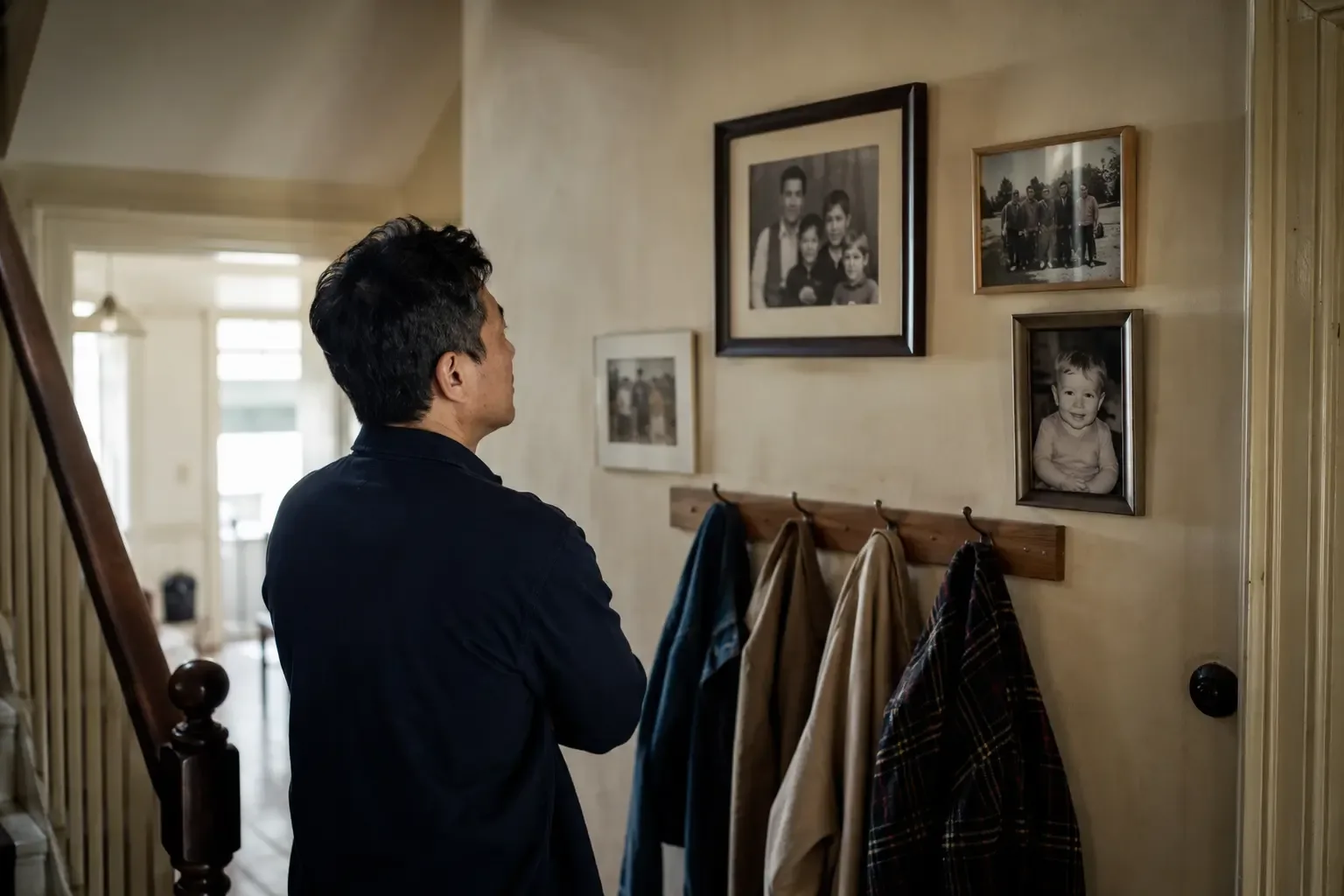
Every life starts partway through somebody else's story. Family, place, language, money or the lack of it, expectation, the historical moment you happened to arrive in. None of it was chosen and all of it was formative.
This is not a search for causes. Looking at where a life began is not a way of explaining the present, and it is certainly not a way of allocating blame.
It is closer to reading the conditions. Some of what you began with is still running quietly, some of it you have already outgrown and some of it you would pick again if it were offered.
What this can help you notice
- What was in place before you had any say in it.
- Which of those conditions are still operating now.
- What you were given that has served you well.
- Which inherited assumptions you have quietly kept without examining.
- That understanding the beginning does not oblige you to change the present.
In the book the roots are what a life began with, and they are never offered as the cause of what is happening now.
Where people usually start
Session, about 35 minutes
Build Your Story
A guided AI interview designed to find the red thread through your experience, clarify how people understand you today and build the story that helps explain where you’re going next.
Why it is relevant here: Puts the sequence of your life into your own words, which is where beginnings become legible.
Workshop, around twenty minutes
The story underneath
Work out where your money rules came from and which ones you still hold.
Why it is relevant here: The clearest worked example of an inherited story still running in adult life.
Reading, a few minutes
I do not recognise myself anymore.
Old photographs feel like somebody else's.
Why it is relevant here: For distance between who you started as and who you are currently being.
If you want to go further
Four things made by other people, chosen because they are useful rather than because they agree with us. None of them is homework, and none of them is a view TAIU is asking you to hold.
READ · Monica McGoldrick
Genograms: Assessment and Intervention
Why this may be useful: The standard work on mapping a family across generations, and a way of seeing patterns rather than blame.
wwnorton.com ↗ (Opens in a new tab)LISTEN · Dan Harris with Steven C. Hayes
Steven Hayes on psychological flexibility
Why this may be useful: On carrying old material without being run by it, which is a different question from resolving it.
tenpercent.com ↗ (Opens in a new tab)READ · Stephen Karpman
Fairy Tales and Script Drama Analysis
Why this may be useful: The short original paper behind the rescuer, persecutor and victim roles families fall into without choosing them.
karpmandramatriangle.com ↗ (Opens in a new tab)READ · Julian B. Rotter
Generalized Expectancies for Internal Versus External Control of Reinforcement
Why this may be useful: The research behind why some people read events as their doing and others as done to them.
apa.org ↗ (Opens in a new tab)
Reading it, and keeping it
Everything listed on this page can be read and worked through without an account. Nothing you write in a public session is sent anywhere or stored by us.
Signing in adds one thing: your own words stay, in My Tree, so that when you come back in six months you can see what you thought at the time rather than reconstructing it.
Take this in any order, or take one and stop there. Deciding that nothing needs changing is a real answer, and it is worth knowing why.