 Ask Alto
TRY · 14 MIN
Business Reality Check
TAIU
The arithmetic that has to hold.
Try it →
Was this useful?
Tool 52 · Develop your business
A guided 18 to 22 minutes conversation, here in TAIU. This exercise will tell you the idea looks weak if the evidence says so. It manufactures no encouragement.
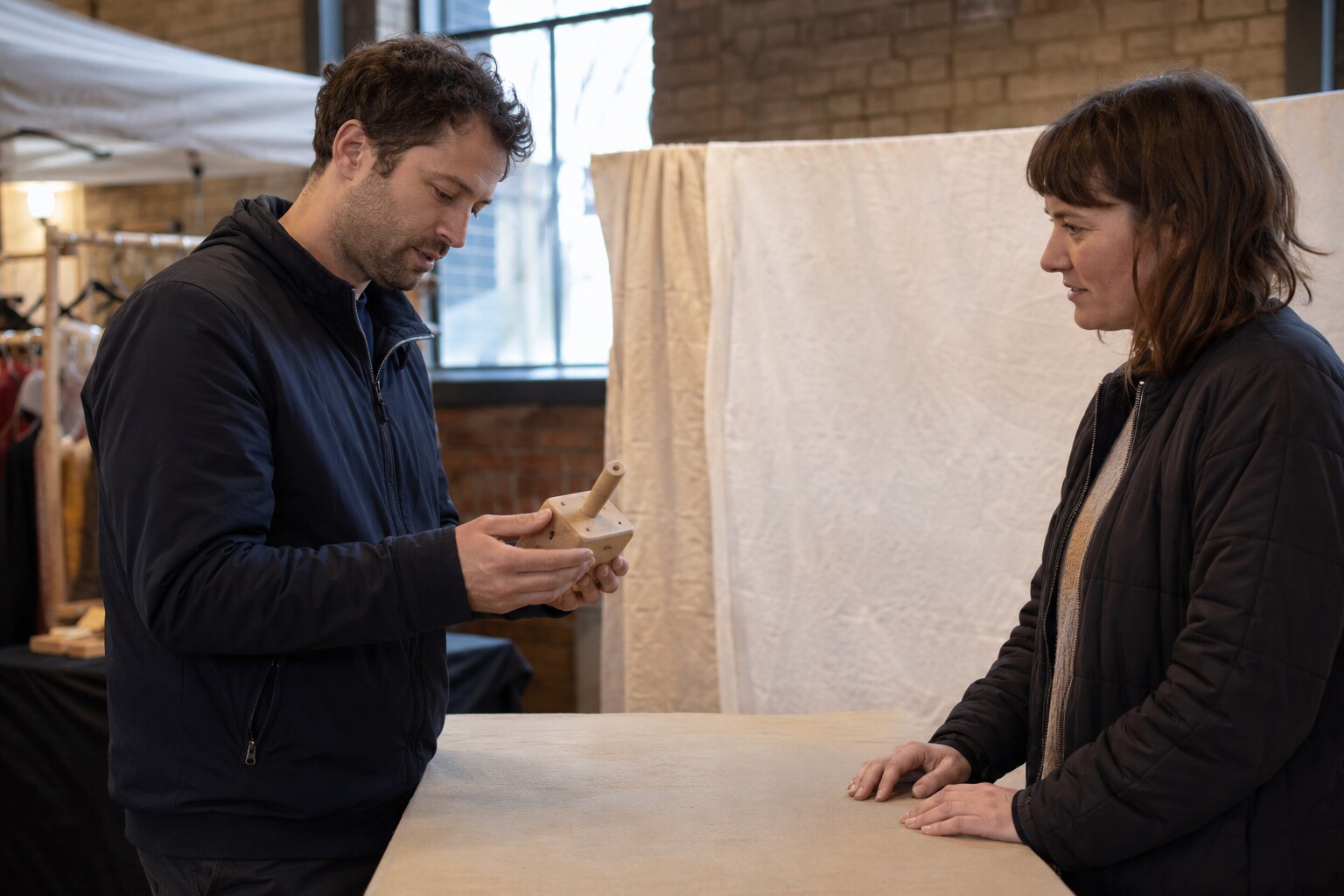
Enthusiasm is free. That is precisely why there is so much of it.
The real competitor is almost never another company. It is whatever they currently do instead.
What you'll look at
A note from Mark

I have watched a lot of good people spend a year building for a customer who was being polite. Politeness is the most expensive input in early business. It is almost impossible to detect from inside your own enthusiasm.
The question I would keep coming back to is not do you like this. It is what do you do about it now. What somebody already does about a problem tells you everything: whether it matters, what they will tolerate, what they already pay and how hard it will be to shift them.
I would also make you say the assumptions out loud. Not to be difficult. Most people carry three or four load bearing beliefs they have never examined, and they are usually the cheapest things in the whole idea to check.
And I would want to know what a no looks like before you go and find out. If you cannot describe the result that would make you stop, you will not stop, and you will spend two years finding out something a fortnight could have told you.
What you'll get
01
Said against done
02
The real alternative
03
Assumptions named
04
One cheap test
+
Your TAIU handover: a summary of what the conversation found, written so you can take it with you.
When you finish
Your tree is where TAIU keeps a picture of your whole life, in parts like work, money and health.
At the end, the conversation asks how Work and purpose feels for you right now, in your own words. It also asks what, if anything, would feel different. Nothing changes on your tree unless you say it changes.
The conversation writes this summary for you. Keep the sheet, print it or paste it into My Tree. Nothing from the conversation is stored by TAIU.
What now?
01 · Save it
The problem and the specific person who has it.
02 · Test it
Ask five people what they currently do about this. Do not describe your idea first.
What I would do
Describe the problem without describing your solution.
Name one real person who has it.
Find out what they currently do instead.
Ask for money or commitment far earlier than feels comfortable.
Decide in advance what a no looks like.
Test it
Who has done something about this, rather than said something?
What do they do instead today?
What would have to happen for you to conclude this is wrong?
The alternative
The expected conclusion is that the idea is either good or bad. The more useful finding is usually narrower than that. Frequently the problem is real, the people are real and the thing that does not exist is access: no affordable way to reach the person who wants it, which is a business problem rather than an idea problem and is often the harder of the two. Sometimes the evidence points somewhere adjacent, at the thing the user has been doing for free while trying to sell the thing nobody wants. And sometimes the honest reading is that the idea is fine and simply not yet worth anybody's eighteen months, which is not the same as being wrong.
Think about this
Take this to Ask Mark
This looks at what you found and helps you understand it. It is not another exercise to repeat.
Take this to Ask Mark →TRY · 14 MIN
TAIU
The arithmetic that has to hold.
READ · ARTICLE
Clayton Christensen and colleagues
The argument that people hire a product to make progress in a particular circumstance. It moves the question from what the thing is to what it is competing against, which is usually doing nothing.
READ · BOOK
Steve Blank
The origin of the argument that facts about customers live outside the building. Useful precisely because it is unglamorous about how much of early belief turns out to be wrong.
What helped you?
If you've read, watched, listened to or tried something that helped you think about this differently, we'd like to hear about it.
We review recommendations before sharing them with the community.
Finished the exercise?
Tell us whether it helped and what you discovered. It takes less than a minute.

Next tool
When demand looks real and the economics are next
Further thinking
The Four Steps to the Epiphany
Steve Blank
The Mom Test
Rob Fitzpatrick
The Premortem
Gary Klein
Book
Steve Blank
The origin of the argument that facts about customers live outside the building. Useful precisely because it is unglamorous about how much of early belief turns out to be wrong.
Book
Rob Fitzpatrick
A short, practical book about asking questions that cannot be answered with encouragement. If people keep telling you your idea is great, read it before you build anything.
Article
Gary Klein
Imagine you've already failed. Now explain why.
Book
Daniel Kahneman
Why confidence and accuracy aren't the same thing.