 Ask Alto
TRY · 12 MIN
Care Without Disappearing
TAIU
Care that does not erase the person providing it.
Try it →
Was this useful?
Tool 40 · Develop yourself
A guided 20 to 24 minutes conversation, here in TAIU. This exercise assumes nothing about decline, makes no medical or legal judgements, and does not decide that you should be the carer.
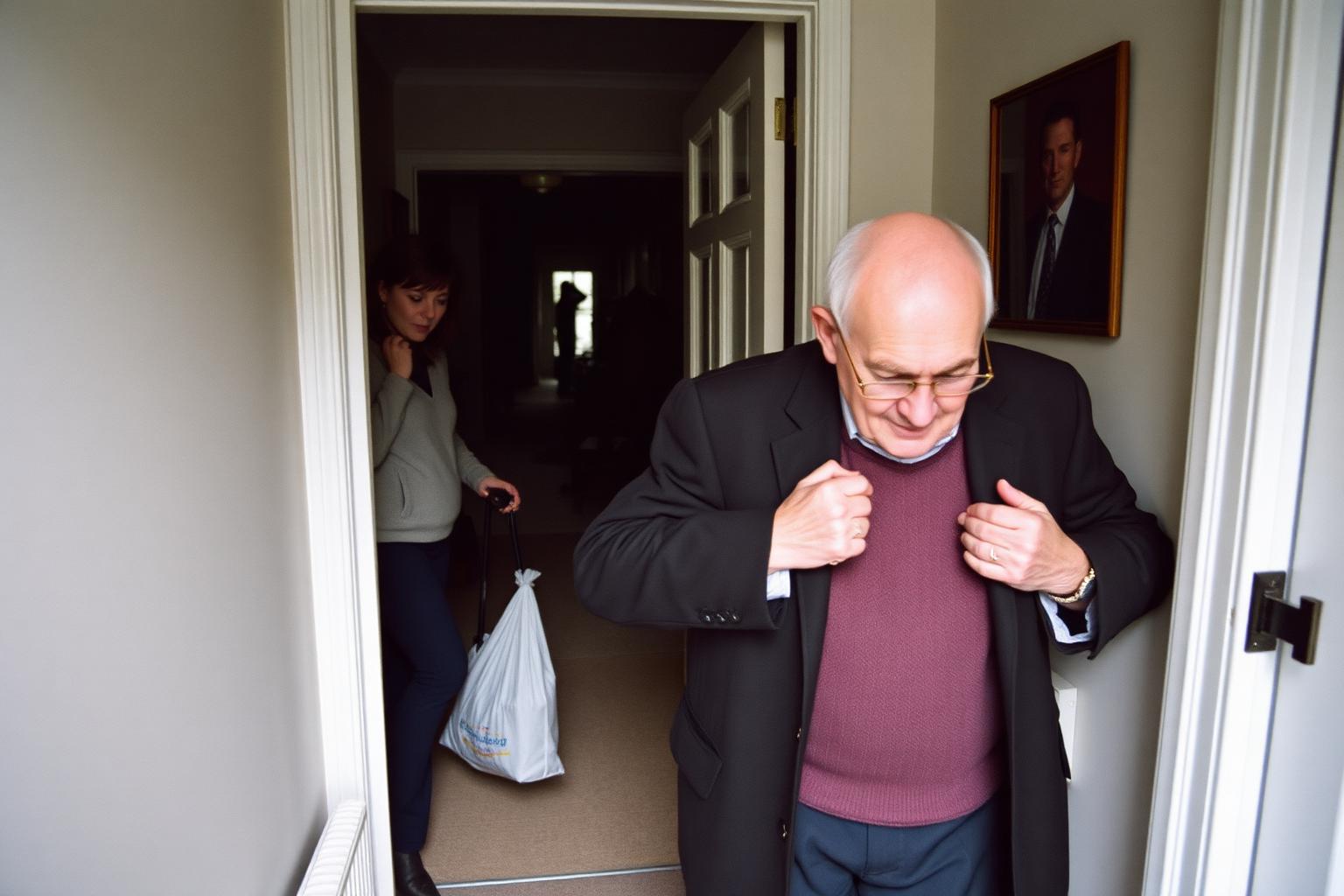
Both are legitimate. They are not the same thing. It is worth knowing which one you are doing.
Have the conversation while it is still theoretical. It is a different conversation after a fall.
What you'll look at
A note from Mark

Most of what is going on in these situations is anticipation. The parent is broadly fine. The adult child is managing five years ahead in their head. That is exhausting, and largely invisible to everybody else.
The question I would ask first is what your parent actually wants. A surprising number of these arrangements are built entirely on assumption. People plan around their parents for years without ever putting the question to them, usually to avoid a conversation everybody finds uncomfortable.
Then there is the difference between care and control. It is a genuinely hard line. Taking over the bills is kind. It is also one more thing somebody used to do for themselves. Both are true. The person losing the task feels it more than the person taking it on.
And I would look at who else is involved. Almost every one of these situations is unevenly distributed, and the resentment that produces usually gets aimed at the parent rather than at the sibling who lives forty minutes away.
What you'll get
01
Observed against feared
02
What they want
03
Care or control
04
Distribution
+
Your TAIU handover: a summary of what the conversation found, written so you can take it with you.
When you finish
Your tree is where TAIU keeps a picture of your whole life, in parts like work, money and health.
This session works on the whole of you, not one part of your life. Nothing is scored. At the end, you are asked once which part of your life this touched most. You can answer none.
The conversation writes this summary for you. Keep the sheet, print it or paste it into My Tree. Nothing from the conversation is stored by TAIU.
What now?
01 · Save it
What is actually happening, separated from what you fear.
02 · Test it
Ask them directly what they would want if things changed. Then write down what they say.
What I would do
Separate what has happened from what might. They need different responses.
Ask them what they want. Most of these situations run on assumptions.
Treat refusal as information rather than as an obstacle.
Look at distribution before you look at effort.
Notice where help makes you feel better and them feel smaller.
Test it
What has actually happened, and what are you extrapolating?
When did you last ask them what they want?
Does this help make them safer, or make you calmer?
The alternative
The expected conclusion is that more help is needed. Two alternatives are frequently stronger. Doing more may make you feel safer while making them feel less independent, which is a real cost paid by somebody who has already lost a good deal of ground. And you may be treating this as a future problem when there is a practical conversation worth having now, while your parent is entirely able to say what they want and how they want it handled. Occasionally the finding is that they are managing, you are worrying, and the worry is the thing to attend to.
Think about this
Take this to Ask Mark
This looks at what you found and helps you understand it. It is not another exercise to repeat.
Take this to Ask Mark →TRY · 12 MIN
TAIU
Care that does not erase the person providing it.
LEARN · GUIDE
Carers UK
Most people caring for a parent are entitled to more support than they have claimed.
READ · BOOK
Atul Gawande
Gawande on what people actually want at the end of life, which is usually not what their families are organising for them. Difficult and clarifying.
What helped you?
If you've read, watched, listened to or tried something that helped you think about this differently, we'd like to hear about it.
We review recommendations before sharing them with the community.
Finished the exercise?
Tell us whether it helped and what you discovered. It takes less than a minute.
Next tool
If the strain is spread across the whole family
Further thinking
Fault Lines
Karl Pillemer
Relatives of the Impaired Elderly: Correlates of Feelings of Burden
Steven Zarit
Being Mortal
Atul Gawande
Book
Karl Pillemer
Pillemer's research on family estrangement and repair, based on interviews with hundreds of families rather than on theory.
Article
Steven Zarit
The work behind the caregiver burden scale. It makes the load measurable, which matters when one person is quietly carrying most of it.
Book
Atul Gawande
Gawande on what people actually want at the end of life, which is usually not what their families are organising for them. Difficult and clarifying.
Article
Laura Carstensen
Why the relationships and goals we prioritise change as our sense of time changes. The finding worth having is that this tracks how much time a person believes is left rather than how old they are, which is why a shortened horizon at thirty produces the same narrowing as one at seventy.