 Ask Alto
LEARN · SERVICE
Relationship support
Relate
If the same conversation keeps failing, a third person in the room changes it.
Find out more ↗
Was this useful?
Tool 42 · Develop yourself
A guided 20 to 24 minutes conversation, here in TAIU. This exercise does not aim at reconciliation, does not judge the other person and treats distance as a legitimate answer.
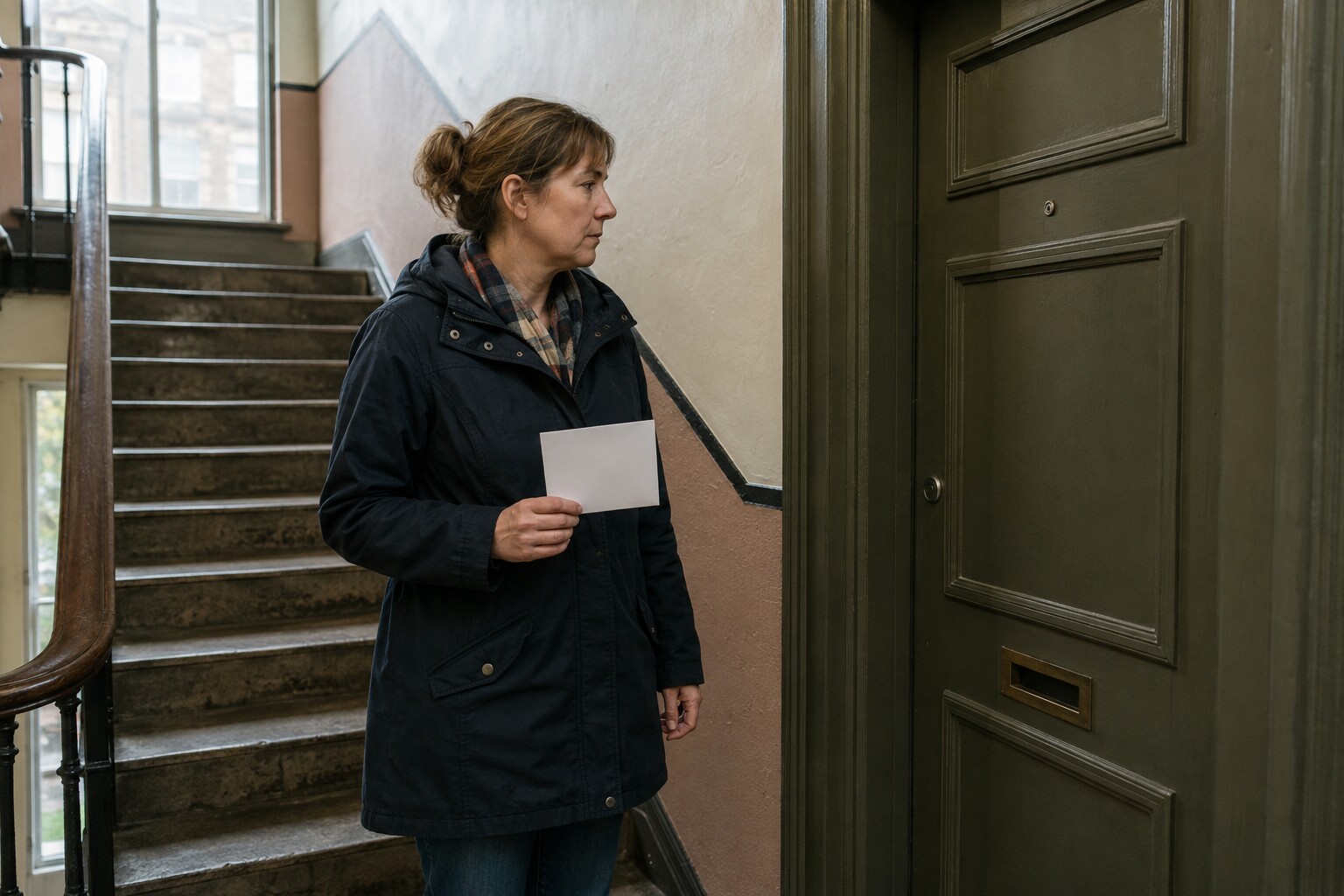
If the pressure is coming from somebody outside the relationship, that is a different conversation and a much shorter one.
The door being open and walking through it are separate decisions. You can make one without the other.
What you'll look at
A note from Mark

The thing that strikes me about estrangement is how much of it is being managed on other people's behalf. A great many people carrying it are leaned on by relatives who find the situation awkward. But awkwardness for somebody else is a poor reason to reopen something that took years to settle.
I would want to know what has already been tried. People discount their own attempts remarkably quickly. Three unanswered letters is not the same starting position as never having tried to make contact. That should change what happens next.
I have no view on whether anybody should be in touch with their family. I do think it is worth knowing whether you are choosing the distance or simply living in it, because those two feel identical from the inside and behave very differently over ten years.
And there are situations where contact is not safe or not survivable. Where that is the case, the work is not repair. It is arriving at a position you can defend to yourself without needing anybody else to agree with it.
What you'll get
01
Known against assumed
02
What was tried
03
What you want
04
A deliberate position
+
Your TAIU handover: a summary of what the conversation found, written so you can take it with you.
When you finish
Your tree is where TAIU keeps a picture of your whole life, in parts like work, money and health.
This session works on the whole of you, not one part of your life. Nothing is scored. At the end, you are asked once which part of your life this touched most. You can answer none.
The conversation writes this summary for you. Keep the sheet, print it or paste it into My Tree. Nothing from the conversation is stored by TAIU.
What now?
01 · Save it
What is actually known, separated from interpretation.
02 · Test it
Write down what actually happened, once, without the interpretation.
What I would do
Keep what happened separate from what you were told happened.
Count the attempts. Repeated attempts that ended badly are evidence.
Notice who benefits from a reconciliation you have not asked for.
Consider forms of contact other than the full return.
Allow the answer to be no, or not yet, without justification.
Test it
How many times have you tried, and what happened?
Who wants this resolved, and are they in the relationship?
What would contact actually cost you next month?
The alternative
The expected question is whether to get back in touch. Two alternatives are frequently more useful. The choice may not be between contact and silence at all, but between the forms of contact available, and a letter that expects no reply is a genuinely different act from a phone call. And the pressure to reconcile is often coming from somebody who is not in the relationship, in which case the real question is what to say to them rather than what to do about the estrangement. Sometimes the honest finding is that the distance is working and the only thing wrong with it is that it has never been decided.
Think about this
Take this to Ask Mark
This looks at what you found and helps you understand it. It is not another exercise to repeat.
Take this to Ask Mark →LEARN · SERVICE
Relate
If the same conversation keeps failing, a third person in the room changes it.
READ · BOOK
Henry Cloud and John Townsend
Best for the ownership question, if you can set aside the framing.
READ · BOOK
Kylie Agllias
A social work account of estrangement written without assuming reconciliation is the goal. It takes seriously the person who has decided distance is the safer arrangement.
What helped you?
If you've read, watched, listened to or tried something that helped you think about this differently, we'd like to hear about it.
We review recommendations before sharing them with the community.
Finished the exercise?
Tell us whether it helped and what you discovered. It takes less than a minute.

Next tool
If you want to understand what was actually running underneath
Further thinking
Fault Lines
Karl Pillemer
Making Meaning of Family Estrangement
Kristina Scharp
Family Estrangement: A Matter of Perspective
Kylie Agllias
Book
Karl Pillemer
Pillemer's research on family estrangement and repair, based on interviews with hundreds of families rather than on theory.
Article
Kristina Scharp
Scharp's work shows estrangement as an ongoing process of distancing rather than a single break, which is why contact can resume without anything being resolved.
Book
Kylie Agllias
A social work account of estrangement written without assuming reconciliation is the goal. It takes seriously the person who has decided distance is the safer arrangement.
Book
Henry Cloud and John Townsend
The book that put the word into general use, and it carries a strong prescriptive tone that will not suit everybody. Take the part that lasts: the distinction between what is genuinely yours to carry and what you have taken on because nobody else would. That question does more work than any amount of language about limits.